Frauscher Sensor Technology has completed the divestiture to Wabtec Corporation.

Find Out More
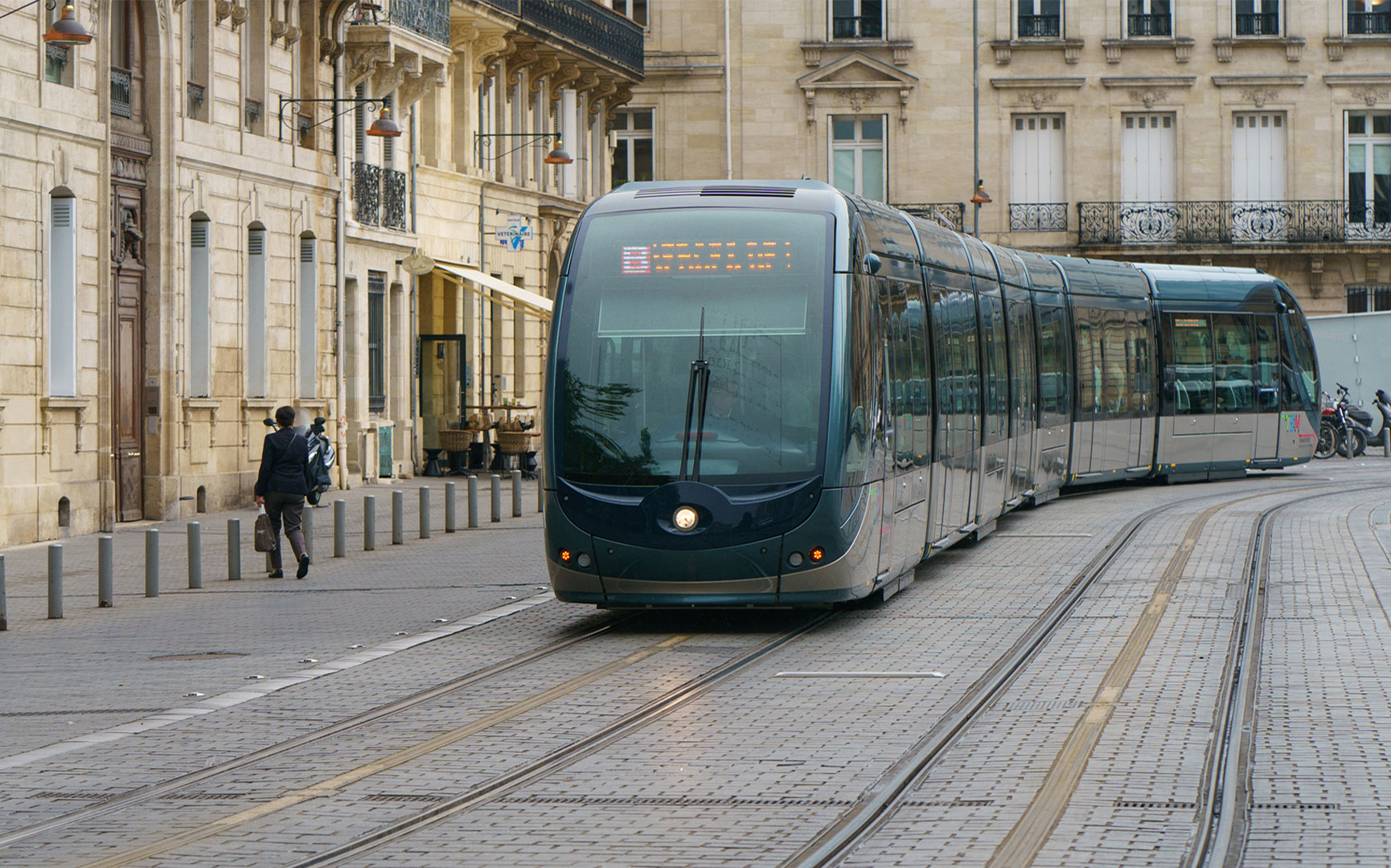
Extension Line D Tram Bordeaux | France
Train DetectionFrance

Extension Line D Tram Bordeaux

Operator
Keolis
Country
France
Partner
Vossloh-Cogifer
Segment
Urban
Application
Track Vacancy Detection
Products
RSR180, FAdC

The Bordeaux tramway was the first French tram system equipped with a Frauscher axle counting system, benefitting from the innovative management methods like Counting Head Control.

The D line of the Bordeaux tramway is a tram line which is around 10 kilometres long. A significant challenge of D line is both the availability and reliability of the signals that allow rolling stock to move without incident.

The implementation of the Frauscher Advanced Counter FAdC and Frauscher Wheel Sensor RSR180 support the innovative concept of Counting Head Control. The patented management method can be implemented without additional hardware and compensates counting errors which are common in urban areas.

Innovative management methods

Counting Head Control CHC is a patented concept by Frauscher which supports the availability of operations.

Patented rail claw

The Frauscher Rail Claw SK420 perfectly fits for grooved rails and has been developed especially for this field.

Similar Projects
This might also interest you
1/5
Train DetectionUnited Kingdom of Great Britain and Northern Ireland

Maintaining the past, creating the future

The Dean Forest Railway (DFR) operates a historical 7 km passenger service line running north from Lydney Junction to Parkend, in the Forest of Dean. Due to extensions of the line and an additional turnout being added at Parkend, an update and modernisation of the existing train detection and signalling system was necessary. Being a heritage railway, it requires high standards in terms of signalling and safety, whilst maintaining the historical touch of the line.
Train DetectionUnited Kingdom of Great Britain and Northern Ireland

Axle Counter Overlay System

Between London St Pancras International Station and Farringdon Station, there is a history of frequent flooding through the tunnels that adversely affected the reliability of the existing train detection system. Due to this, the installation was non-operational during large periods. However, being a mainline section and a core route through London, high reciliation to any sort of failures is vital.
Train DetectionUnited States of America

Tracking Trains in Houston

Houston MetroRail (METRO for short) is comprised of three light-rail lines covering 22 miles. Two-car, low-floor trainsets are powered by overhead catenary and operated on a mix of rail types, including embedded, grooved, concrete, and ballasted track. Harsh weather conditions such as extreme heat, humidity, and storms with heavy rains causing floods are typical for Houston. Combined with the variable track structure this caused significant malfunctions of the wheel sensors of METRO’s signalling system.
Train DetectionFrance

Homologation for the Île-de-France tramway network

The network of Île-de-France tramways in the region of Paris has been a showcase model of public transport since the line T1 opened in 1992. Over a million passengers use these trams daily and today, the system consists of 11 lines covering over 100 kilometres of track. Over the next years it is planned to expand this network even further. For track vacancy detection, the Frauscher axle counting system is considered as being the ideal solution for this comprehensive network.
Train DetectionAustria

GKB Graz-Köflacher Bahn

The operator of the Graz-Köflacher Bahn has made substantial modernisations to the network, choosing a decentralised system architecture and the EULYNX standardised interface. In this case, it was crucial that the new system would ensure a seamless transition from the previous parallel interface for relay systems to EULYNX.